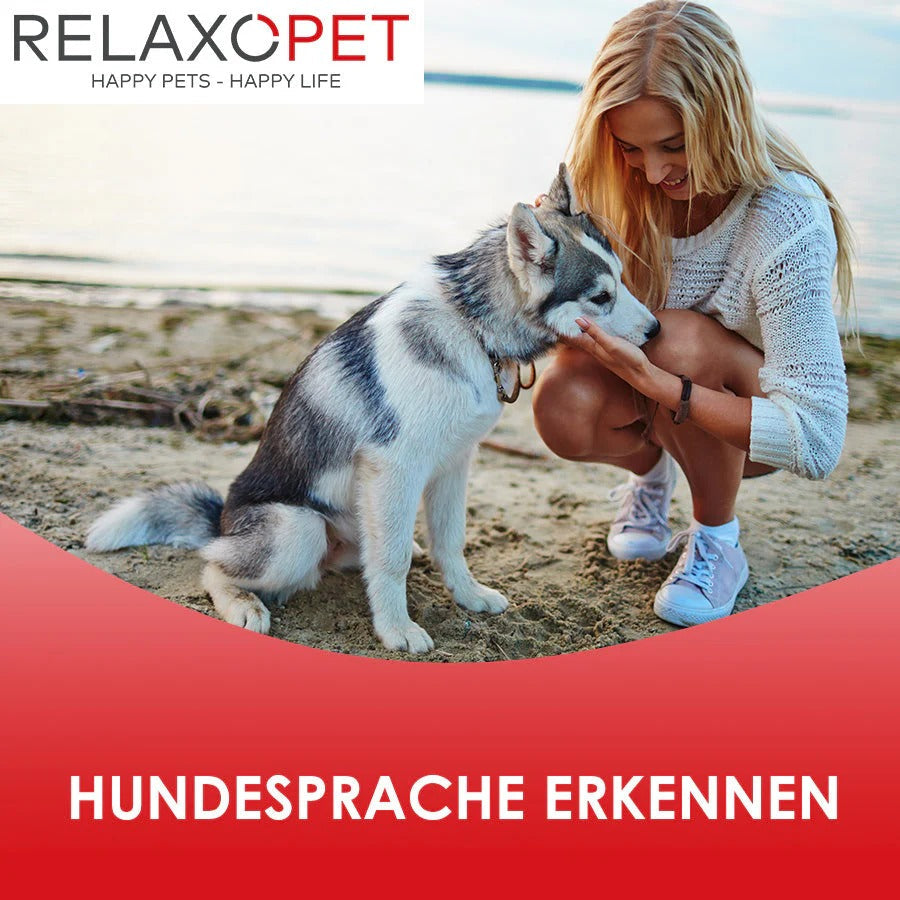
Correctly interpreting dog body language – understanding your dog's language
Dogs communicate differently than humans – instead of words, they primarily use body language and facial expressions. As a dog owner, you've certainly noticed that your four-legged friend is constantly "talking" to you: through tail wagging, ear position, eye contact, and many other signals. This dog-human communication often happens non-verbally and can be easily misunderstood. By understanding your dog's body language, you strengthen your bond and avoid misunderstandings in everyday life. In this guide, we will explain in a friendly and well-founded way how you can interpret the most important body signals in dogs – from the tail to facial expressions to body tension – and what current findings in behavioral research say about it. This way, you will learn to "read" your dog and better respond to their needs.
Interpreting Body Language in Dogs: Body Signals from Head to Tail
Your dog's posture and movements reveal a lot about their mood. Observe them from head to tail: How do they hold their tail? What is their posture – relaxed or tense? Even small changes can have great significance.
-
Tail position and wagging: The tail is an important mood indicator. A happy, relaxed dog usually carries their tail high and wags it vigorously – often their hindquarters even wobble with joy. If the tail is, on the other hand, held low or tucked between the legs, it signals insecurity or fear. Caution: If a dog wags its tail very slowly with its tail held stiffly upright, and its body appears tense and immobile, this rather indicates high tension or impending aggression. The direction of wagging is also interesting: Studies have shown that a wag directed to the right (from the dog's perspective) tends to express positive feelings – for example, when joyfully anticipating their owner. A wag directed to the left, however, has been observed in dogs in rather unpleasant situations and can indicate negative emotions or discomfort. Dogs recognize these subtle differences among themselves and react accordingly.

-
Body posture and body tension: Observe how your dog moves and how much tension is in their body. A loose, supple gait with a relaxed posture signals calmness and self-confidence. If the body is stiff, the muscles tense, perhaps even the ruff (the "hackles") raised, this means alertness or stress. If your dog makes themselves large (chest out, weight shifted forward), they are trying to impress or feel challenged. If they crouch, however, hold their head low, or make themselves small, they are showing submission or insecurity. Leaning sideways against you or another dog can mean appeasement ("I won't harm you"), while a cautious approach in slow motion is often an attempt to reduce tension – unfortunately, we humans sometimes misinterpret this behavior as "dawdling" or disobedience. Learn to see these posture signals in the overall picture to better understand your dog.
-
Movements and gestures: In addition to posture itself, certain gestures reveal a lot. A typical play bow is the front-end-down posture (also known as a play bow): Your dog lowers their front legs and raises their hindquarters – a clear indication that they want to play and do not mean their wild movements aggressively. Jumping, paw lifting, or joyful bouncing around are also positive, playful signals. But also pay attention to slowing down: If your dog suddenly moves in slow motion, for example, if you seem strict, they might be trying to appease ("It's all good, please no stress").
Overall: Always consider the whole dog in context. Tail wagging, for example, should never be interpreted in isolation – look at the entire body language to correctly assess joy, stress, or insecurity.
Typical body signals and their meaning
For a better overview, here are some important body signals of the dog and what they (mostly) express:
|
Signal (Body Language) |
Meaning for the Dog's Mood |
|---|---|
|
Tail up, wagging vigorously (hindquarters wiggling)(often in a relaxed body posture) |
Joy, positive excitement – the dog is in a friendly mood. |
|
Tail tucked low, hardly or only hesitantly wagging (body crouched) |
Insecurity, fear, or submission – the dog feels uncomfortable. |
|
Tail stiff, slow wagging (body tense, possibly fixed gaze) |
High tension, possibly aggression – the dog is on high alert. |
|
Wagging predominantly to the right (from the dog's perspective) (tail slightly swinging right) |
Positive emotions – the dog feels comfortable, e.g., joy at the sight of its human. |
|
Wagging predominantly to the left (tail swinging more to the left) |
Negative emotions – discomfort or caution, possibly a warning signal to other dogs. |
|
Upright, tense body, weight forward |
Self-confidence or posturing – the dog wants to make an impression (can also be a threat). |
|
Crouched posture, shifted backward |
Submissiveness or insecurity – the dog shows it doesn't want conflict. |
Note: Every signal must be seen in the overall context. A high-held tail, for example, can simply show self-confidence in a relaxed environment, while it could signal dominance when encountering an unfamiliar dog. Always pay attention to combinations of body language, facial expressions, and situation.
Understanding a Dog's Facial Expressions: What Their Face and Ears Reveal
Not only a dog's body, but also their facial expressions speak volumes. Dogs, like us, have expressive facial musculature that can indicate feelings such as relaxation, stress, or aggression. So, look your dog in the face: eyes, ears, and corner of the mouth provide important clues.
-
Eyes and Gaze: "Look into my eyes" also applies to dogs – although you shouldn't overdo it, as direct, prolonged eye contact seems threatening to many dogs. A soft, relaxed gaze with normally open eyes shows that your dog is feeling comfortable. If they blink slowly or occasionally avert their gaze, they are generally friendly or submissive – averting their eyes serves as a polite "I don't want a fight" signal. Fixed, unwavering stares, on the other hand – especially with a hardened facial expression – are warning signs and can mean aggression or great discomfort. You see: Your dog's eye posture (wide open vs. half-closed, staring vs. blinking) is an important mood indicator.
-
Ear position: Your dog's ears are another emotional barometer. Of course, it depends on the breed (a pug cannot "play" with its ears as much as a German Shepherd), but generally: Ears held upright, pointing forward, signal attention and interest – the dog is alert and focused. You see this, for example, when your dog hears an unfamiliar sound or senses something exciting. Ears laid back (flat against the head), on the other hand, show insecurity, fear, or submission. This is often accompanied by a crouching body movement. Slightly splayed or relaxed ears usually mean neutrality or calmness. Learn to "read" your furry friend's ears – they often move faster than the rest of the body and provide early insight into their emotional state.
-
Mouth, lips, and teeth: Another part of a dog's facial expression are the lips (flews) and the mouth area. A "relaxed mouth"—slightly open, tongue perhaps hanging loosely—shows that the dog is calm. You could almost call it a "smile," although dogs, of course, smile differently than we do. Pulled-back lips, bared teeth, a tense corner of the mouth, however, speak a clear language: Caution!—the dog is irritated, feels threatened, or wants to threaten. If you observe your dog baring their teeth (showing teeth), paired with staring at the other party, you should keep your distance and calm the situation. Sometimes dogs only slightly pull back their lips without showing teeth—often a sign of discomfort or insecurity, along the lines of "I'm uncertain, please keep your distance." Also pay attention to wrinkles on the face: raised lips or tense facial muscles cause the forehead to furrow—also a sign of stress or aggression.

A fascinating scientific insight: Over the course of domestication, dogs have developed special facial muscles to better communicate with us humans. For example, dogs possess a muscle that enables them to raise their inner eyebrows – responsible for the world-famous "puppy dog eyes" with big, sad dog eyes. Wolves do not have this muscle to this extent! Raising the eyebrows makes the dog's eyes appear larger and more childlike, which automatically awakens a protective instinct in the human observer. In other words: Our dog has learned to soften our hearts with a certain facial expression – a beautiful example of how communication between dog and human has evolved over millennia.
Recognizing Calming Signals: How Dogs Indicate Stress and Conflict
Dogs not only show obvious signals like tail wagging or baring teeth, but also many subtle gestures to relieve stress or avoid conflict. These so-called Calming Signals or appeasement signals are often subtle, but become clearer if you pay attention to them. Here are a few typical examples:
-
Yawning: Your dog yawns and isn't even tired? In dog communication, yawning is a common calming signal. Dogs yawn to calm themselves and others. Along the lines of: "Please relax, I want peace." You see it, for example, when a game with another dog gets too wild – a dog yawns to say "it's not that serious, let's calm down a bit". Interesting: Studies show that dogs are even contagiously affected by human yawning – especially by their primary caregivers, which is seen as a sign of empathy and a strong bond.

- Licking nose (tongue flick): When a dog licks its nose and lips with its tongue, it's not always about food. Often this occurs in uncomfortable situations and means stress or insecurity. It's as if the dog is saying: "This situation makes me uneasy." A short tongue flick can be seen, for example, when you lean over the dog or it suddenly becomes the center of attention. Also, at the vet or in confined spaces, dogs may lick their noses more frequently – a clear sign that they feel uncomfortable and want to appease.

-
Looking away and turning away: A very polite signal among dogs is averting the gaze or even the entire body. By demonstrably looking away or turning slightly away from someone, your dog shows: "I come in peace." Perhaps you have already observed this when unfamiliar dogs sniff each other – the first contact is often made sideways, not frontally. Dogs also use this signal towards us humans. So don't stare directly at your dog if they seem insecure – it is better to turn sideways slightly and avoid direct eye contact to appease (just as dogs would do in reverse).

-
Shaking, sneezing, displacement activities: Sometimes, after a stressful situation is over – e.g., an unpleasant encounter or training session – the dog suddenly shakes itself, as if it were wet. This shaking serves to relieve stress ("shaking off the stress"). Sneezing can also occur, especially in moments of great joy or excitement, such as during boisterous play or greetings. In these cases, it means "Everything's alright, I won't hurt you" and helps the dog to calm itself. As strange as it sounds: If your dog yawns, scratches itself, or sniffs at inappropriate moments, these can be displacement activities – the dog doesn't know what to do and chooses a neutral activity to buy time and stay calm.

These calming signals show how sensitive dogs communicate. They are often more polite than we humans! It is important that you neither ignore nor punish such signals. If your dog yawns or turns away, for example, even though you call them, they are probably trying to relieve tension – they are not "stubborn," but stressed. By recognizing these signs, you can react appropriately: give the dog space, calmly talk to them, or defuse a stressful situation. This is how you respond to your dog in their own way – after all, communication is not a one-way street.
Dog and Human – A Special Communication
Communication between humans and dogs is based on mutual learning and trust. Over millennia, dogs have learned to interpret our gestures and even facial expressions – and conversely, we do well to learn their signals. Did you know that dogs not only listen to our words but also pay close attention to our tone of voice and body language? A cheerful face and relaxed voice have a calming effect on your dog, while hectic movements or a tense tone can make them nervous. So, try to communicate consciously with your dog: with clear body signals, a consistent voice – and above all, with patience and calm.
It's interesting how closely our emotions are linked to those of dogs. Current scientific studies show that dogs can sense and even adopt their owners' feelings. For instance, it has been found that in stressful situations, the heart rate of dog and owner synchronizes – if the human is agitated and their pulse quickens, the dog's pulse also rises in sync. This phenomenon is called emotional contagion. It means: Our stress is directly transferred to our dog (and incidentally, our calm and joy as well). For everyday life, this means: Stay calm yourself, because your dog will immediately notice if you are nervous, angry, or anxious. Your mood directly influences your dog's well-being.

Conversely, the same applies: If you understand dog language, you can react appropriately and thus gain your dog's trust. A simple example: Your dog ducks at loud noises and lays back their ears (i.e., is afraid) – instead of pressuring them, speak to them calmly, show through relaxed body posture that there is no danger. Praise and positive reinforcement at the right time (e.g., a calm "It's okay" in a relaxed voice) help your dog enormously. This way, communication becomes teamwork: The dog sends signals, you receive and respond accordingly, and vice versa. Over time, this creates routine processes of mutual understanding – the basis for a deep human-dog relationship.
Help with Stress: How RelaxoPet PRO and SENSE can calm your dog
Despite all knowledge of body language, stress in a dog's daily life cannot be completely avoided. It is then important to react correctly. If your dog shows clear signs of stress – e.g., tucked tail, panting, trembling, or frequent yawning – in addition to your calming reassurance, special relaxation aids can also help. This is where RelaxoPet products come into play, developed for stressed or anxious dogs. In particular, RelaxoPet PRO and the RelaxoPet SENSE series help to calm your dog when his body language indicates fear, restlessness, or overwhelm.
RelaxoPet Pro
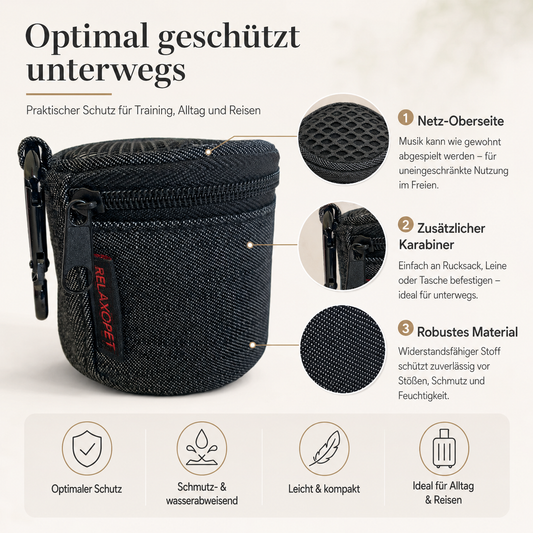
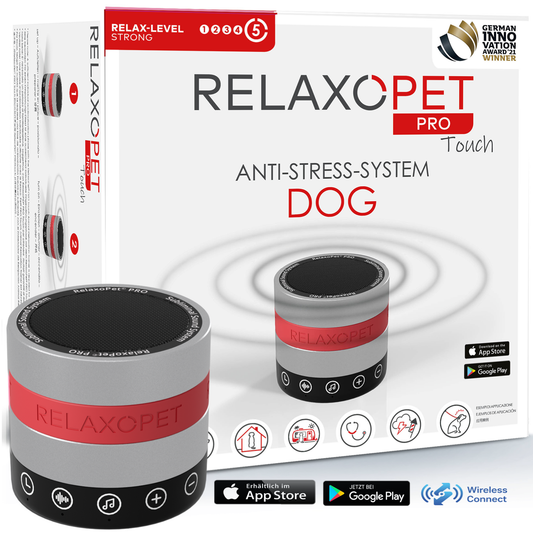
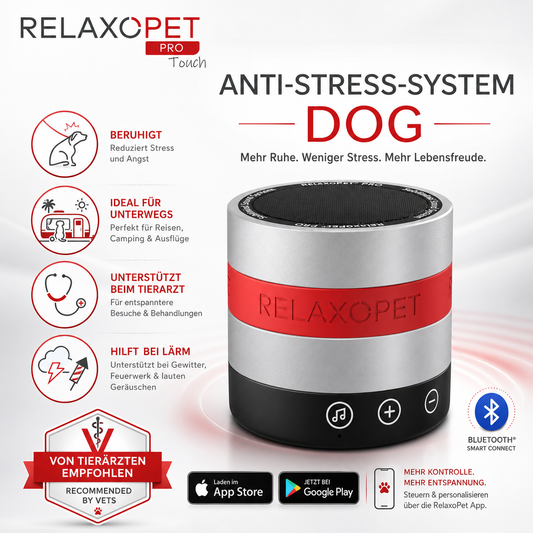
RelaxoPet PRO is an innovative relaxation trainer for dogs that works with special sound waves and frequencies that are sometimes inaudible to humans but have been proven to be calming for dogs once they are conditioned to them. Imagine RelaxoPet PRO as a small box that plays gentle relaxation sounds tailored for dogs. Many dogs calm down much faster with it – even in situations where they would otherwise react panically. Practical: The device has a sensor (NOISE-MOTION technology) that detects when the dog is stressed (e.g., by a sudden loud noise) and switches on automatically, even when you are not in the room. This way, your dog is calmed as soon as stress arises and feels safer. You can operate RelaxoPet PRO both audibly (with soft music) and silently – the latter only sends vibrations perceptible to dogs. Many owners report amazing effects: Their dog sleeps more relaxed, reacts less anxiously to thunderstorms, or remains calmer alone at home. Acclimation is simple: Place the device in your dog's favorite spot, switch it on – and relaxation can begin.
What is RelaxoPet PRO particularly suitable for? Typical areas of application are all situations that dogs typically find stressful. For example:
-
Thunderstorms and storms: In stormy weather with thunder and lightning, many dogs become restless or panic. RelaxoPet PRO helps to alleviate anxiety.
-
New Year's Eve (fireworks): The loud bangs and lights on New Year's Eve often trigger strong stress. Relaxation sounds can calm your dog so that he reacts less timidly.
-
Vet visits: In the waiting room, surrounded by strange animals and smells, relaxation is golden. The sounds can reduce tension before and during the vet visit.
-
Travel and car journeys: Many dogs feel uncomfortable when traveling, whether by car, train, or plane. RelaxoPet PRO creates a familiar soundscape that provides security.
-
Alone at home: If your dog has to stay alone, for example, while you are at work, the device with its automatic sensor can intervene and have a calming effect when restlessness arises.
RelaxoPet Sense
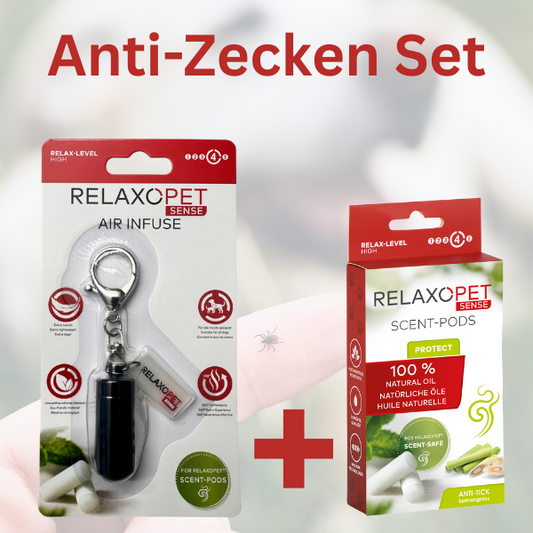
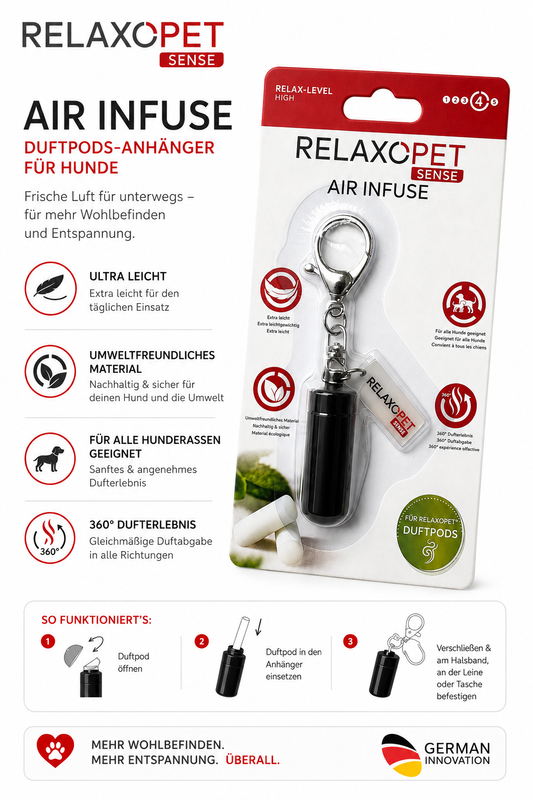
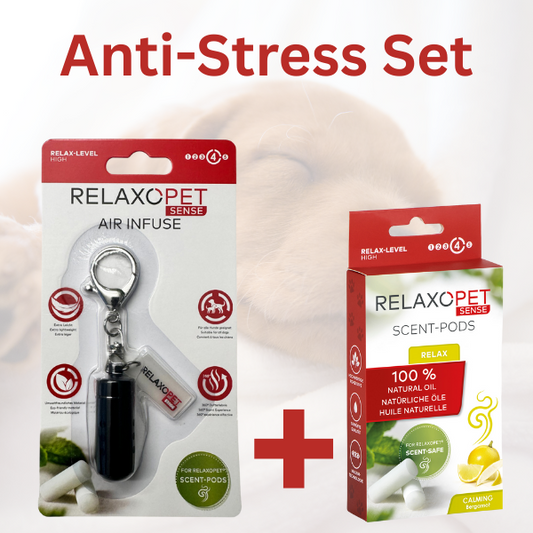
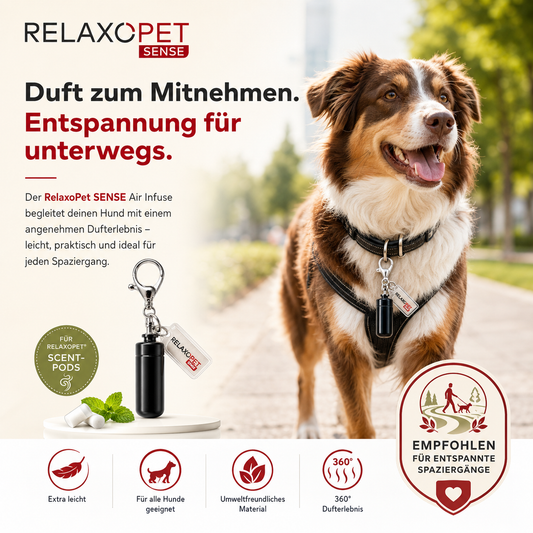
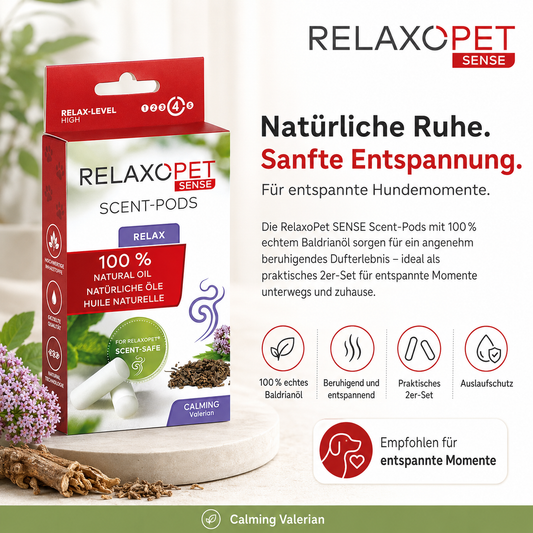
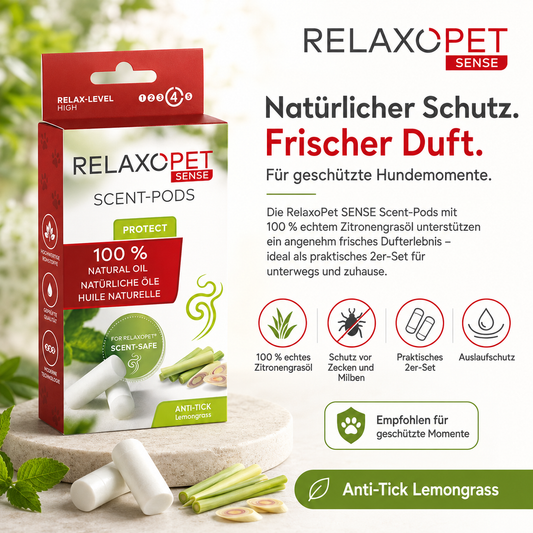
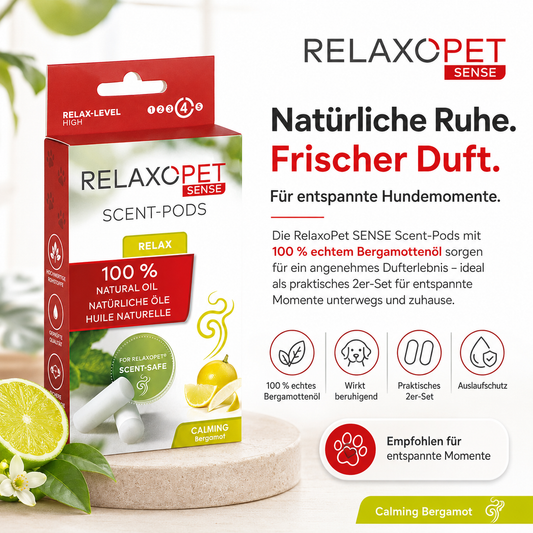
In addition, there is RelaxoPet SENSE, an aromatherapy system for dogs. Dogs have a highly developed sense of smell and react positively to certain pleasant scents. RelaxoPet SENSE utilizes exactly this: It diffuses calming scent pods into the room using a special diffuser (RelaxoPet Air Infuse) – e.g., with natural bergamot or valerian extracts, which are known for their relaxing effect. Unlike ordinary air fresheners, these aromas are animal-friendly (without irritating chemicals or overly strong perfumes) and safe for dogs. The diffuser operates practically silently and distributes the scent evenly, creating a relaxing environment – entirely without medication. You simply insert a scent pod of your choice (e.g., "Relaxation" with bergamot/valerian) and switch on the device. Especially in cases of inner restlessness, anxiety, or after exciting events, the aromatic signal helps the dog's brain to calm down. Many dogs lie down comfortably to sleep instead of barking or pacing nervously when RelaxoPet SENSE is in operation. Important: The scents used are only subtly perceptible to humans – so your home won't smell overpowering, and your dog will still benefit from the effect.
The Combination of Sound and Scent
Both approaches – sound and scent – can even be combined. This creates a holistic anti-stress system: While calming sounds promote auditory well-being, relaxing scents support olfactory well-being. Together, RelaxoPet PRO and SENSE offer effective help, especially for dogs that are highly susceptible to stress. (Tip: Some dog owners use RelaxoPet PRO, for example, during the day in silent mode plus the SENSE diffuser in the home – this positively influences all of the dog's senses and makes him feel completely secure.) Of course, such an aid does not replace loving care or training, but it can give your dog the necessary impulse to relax in critical moments. Especially when your dog's body language is alarming (trembling, panting, cowering in fear), these products can be valuable support to help him calm down faster. You as the owner will also be relieved, because a relaxed dog also means fewer worries for you.
Conclusion: Decoding dog language – for a better coexistence
Understanding a dog's body language requires attention, empathy, and some knowledge of typical signals. The more you pay attention to your dog's tail, ears, eyes, facial expressions, and posture, the better you can assess how your dog is feeling and what he wants to tell you. This knowledge helps you to react correctly in good time – whether it's joy, play, stress, or fear. The result: Your dog feels understood and taken seriously, and trust grows. You avoid misunderstandings (for example, that a seemingly "joyful" wagging tail was actually tension) and can give your dog the support he needs to feel safe and loved.
Remember that communication with your dog is always two-sided. Observe him, learn his signs, and respond to him through your behavior – be it through calming words, clear signals, or RelaxoPet aids in stressful moments. This is how mutual understanding grows. In the end, you and your dog speak different languages, but understand each other without words. And what could be more beautiful than your best four-legged friend trusting you and sharing his feelings with you? By decoding dog language, you lay the foundation for an even closer, happier relationship between you and your dog – Happy Pets, Happy Life, entirely in the spirit of RelaxoPet. Enjoy observing and "interpreting" the many loving signals your dog gives you every day!